

Pasta di Gragnano: why it cooks differently
8 June 2026
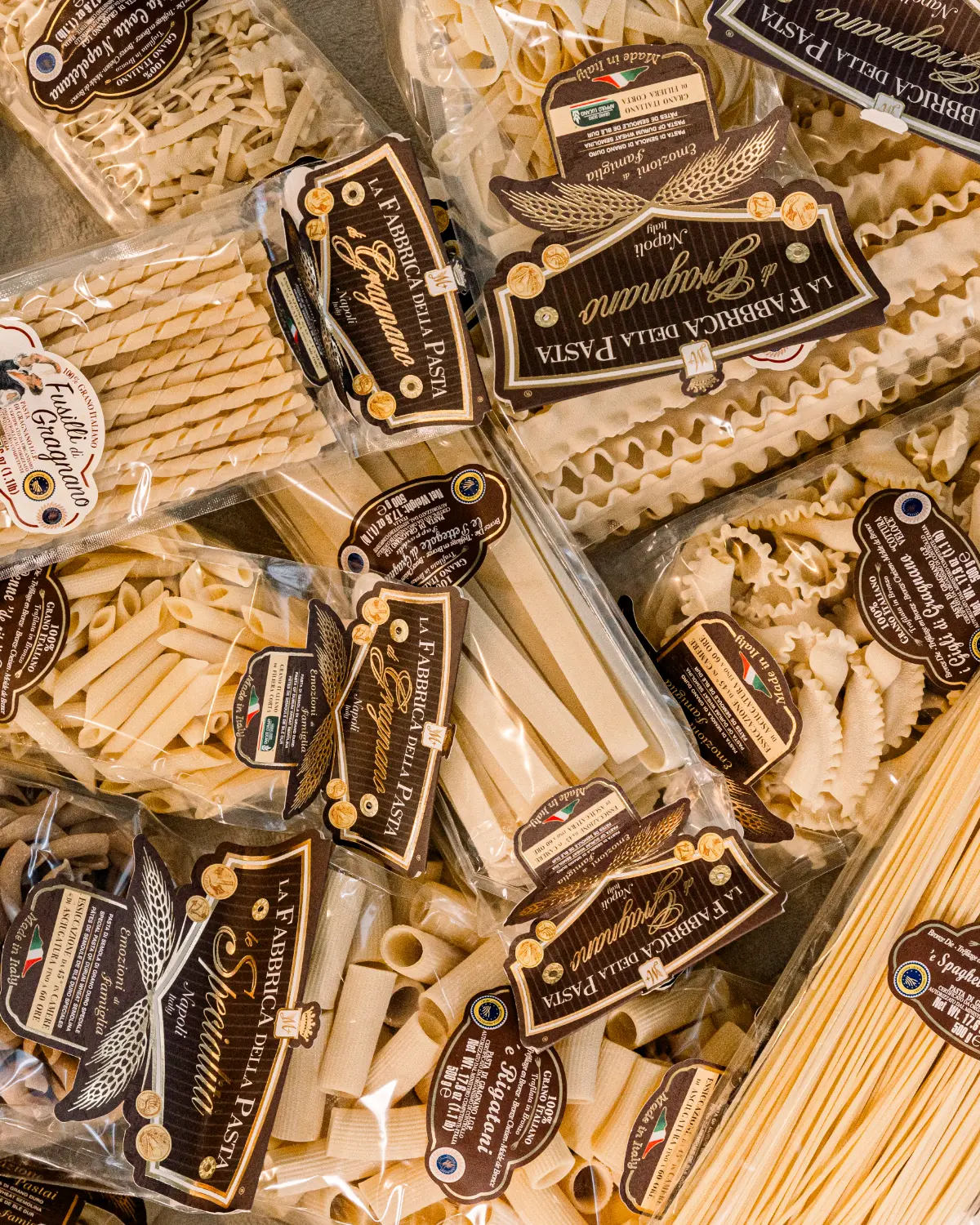
Walk through the streets of Gragnano, a small hilltop town just south of Naples, and you will feel a constant, gentle sea breeze moving through the valley. For centuries, this specific microclimate turned the entire town into an open-air drying room for pasta.
Growing up in a family with over 60 years of heritage in the Italian food culture, you quickly learn a fundamental truth: pasta isn’t just a neutral vehicle for sauce. It is the foundation of the entire dish.
When you cook a true, certified Pasta di Gragnano IGP, it behaves entirely differently in the boiling water and on the plate compared to standard industrial pasta. Here is the science and craftsmanship behind why it stands alone.
The Artisanal Pillars of Gragnano
Industrial pasta factories prioritize speed and volume, using techniques that strip wheat of its character. Authentic Gragnano pasta relies on two uncompromised traditions that directly alter how it cooks.
1. Trafila al Bronzo (Bronze-Die Extrusion)
To shape the pasta, the dough is pushed through a die. Industrial brands use slick Teflon dies because they are fast and cheap, leaving the pasta with a smooth, shiny surface.
Gragnano pasta is extruded strictly through traditional bronze dies. The bronze grips the dough, leaving a rough, matte, chalky texture.
- Why it matters for cooking: Look closely at a piece of raw Gragnano pasta, and you will see a fine white dust and a textured surface. This rough exterior acts like Velcro for your sauce. Instead of sliding off to the bottom of the bowl, the sauce binds directly to the pasta, uniting the dish.
2. Lenta Essiccazione (Slow, Low-Temperature Drying)
Industrial pasta is flash-dried at extreme temperatures (often over 100°C) for just a few hours. This essentially cooks the starches early, trapping them, but it destroys the natural flavor of the wheat and makes the pasta brittle.
True Gragnano pasta is dried slowly at low temperatures (typically under 50°C) for anywhere from 24 to 60 hours depending on the shape.
- Why it matters for cooking: This slow process preserves the protein structure (gluten network) of the durum wheat in its natural state. When boiled, the pasta maintains incredible elasticity. It doesn't become mushy or sticky; it retains a perfect, firm "bite" right down to its core—the definition of true al dente.
How to Cook It Properly: Mastering Risottare
Because Pasta di Gragnano is rich in high-quality starches, you should never simply boil it, drain it into a colander, and dump sauce on top. To honor the ingredient, you want to finish cooking the pasta directly inside the sauce pan. In Italy, we call this technique risottare.
- Use Abundant Water & Salt: Bring a large pot of water to a rolling boil. Salt it generously until it tastes like a mild sea broth.
- Drain Just Before Al Dente: Drop the Gragnano pasta. Check the package timing, but pull the pasta out of the water using a slotted spoon about 2 to 3 minutes before it hits perfect al dente. It should still have a solid white core.
- The Marriage in the Pan: Transfer the pasta directly into your simmering sauce pan over medium-high heat.
The Insider Secret: Do not throw away the pasta water. It is liquid gold, packed with the premium starches released by the bronze-die pasta. Add a ladle or two of this starchy water directly into your sauce pan as you toss the pasta.
As you swirl the pan, the starches from the Gragnano pasta emulsify with the fats in your sauce (like a premium extra virgin olive oil or tomato reduction). It magically transforms a thin sauce into a rich, velvety glaze that clings beautifully to every single piece of pasta.
In other words: do not just boil it. Let it finish where the flavor is.